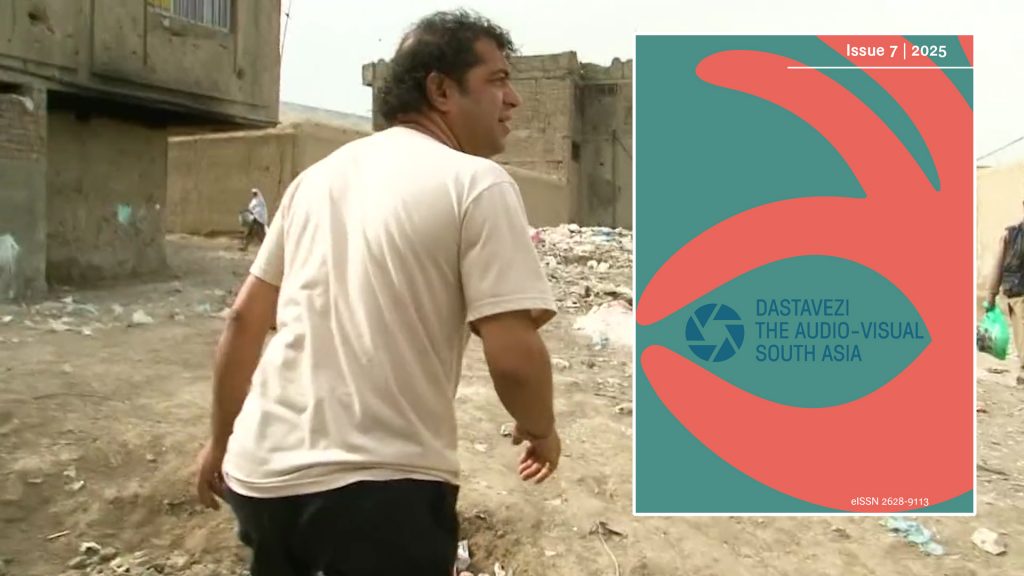
On the Death of the Kabul Tabla Player Javed Hussain Mahmoud

5. Januar 2026

Published in: Dastavezi | the Audio-Visual South Asia | Vol. 7 (2025)

https://hasp.ub.uni-heidelberg.de/journals/dasta/article/view/28578

This article examines the death of the Kabul-born tabla player Javed Hussain Mahmoud (1972–2024) as a lens through which to explore the fragile conditions of musical memory in the Afghan diaspora. Drawing on my long-standing engagement with Afghan musicians and on audiovisual, ethnographic, and archival materials, the text situates Javed’s biography within the larger history of Kabul’s hereditary musician community in the Kucheh Kharabat. Once central to shaping Afghanistan’s musical modernity, this community experienced displacement, marginalization, and the near-eradication of its artistic infrastructure after decades of political violence. Javed’s life—rooted in a lineage of masters yet marked by exile, ill health, and isolation—embodies this broader rupture. By weaving personal recollections, field notes, and analyses of online media traces, the text explores the tensions between lived memory, inherited artistic lineages, and algorithmically mediated forms of remembrance. It argues that the narratives articulated by musicians from the Kucheh Kharabat—insisting on their foundational role in creating Afghanistan’s modern art-music tradition—remain insufficiently recognized within dominant public discourses, both in Afghanistan and in diaspora contexts. This text is thus as much an act of remembrance as it is a methodological reflection on the media conditions under which such remembrance now takes place.

Published in: Dastavezi | the Audio-Visual South Asia | Vol. 7 (2025) https://hasp.ub.uni-heidelberg.de/journals/dasta/article/view/28578 This article examines the death of the Kabul-born tabla player Javed…
Weiterlesen

Wie man Imperium buchstabiert. Das ›Tataren-Lager‹ Weinberge 1914-18

27. Januar 2025

Neu erschienen im Wallstein Verlag:
Gerdien Jonker/Markus Schlaffke
Wie man Imperium buchstabiert. Das ›Tataren-Lager‹ Weinberge 1914-18

Am 19. November 1914 riefen Deutschland und die Türkei gemeinsam zum ›Jihad‹ gegen Russen, Briten und Franzosen auf. In Deutschland entstanden
islamistische Propagandalager, in denen muslimische Kriegsgefangene für die deutsch-türkische Allianz gewonnen werden sollten.
Die 18.000 russisch-muslimischen Kriegsgefangenen im Weinberglager in der Nähe von Berlin bekamen diese Politik am eigenen Leib zu spüren. Ihre
Bewacher versuchten sie mit ›islamischer‹ Propaganda zu ködern. Die Gefangenen entwickelten indes Strukturen, um westliche Bildung zu erwerben. So buchstabierten sie ihre Rolle in der imperialen Ordnung und
bereiteten ihre Unabhängigkeit vor.

https://www.wallstein-verlag.de/9783835358201-wie-man-imperium-buchstabiert.html

Neu erschienen im Wallstein Verlag:Gerdien Jonker/Markus SchlaffkeWie man Imperium buchstabiert. Das ›Tataren-Lager‹ Weinberge 1914-18 Am 19. November 1914 riefen Deutschland und die Türkei gemeinsam…

Weiterlesen

The Indian Parsifal: Revisiting Felix Gotthelf’s Forgotten Opera Mahadeva

1. Dezember 2023

In this chapter, Markus Schlaffke describes a listening experiment designed to re-access the music of Felix Gotthelf’s Indian opera Mahadeva and to analyse the sounds of what had clearly been a significant cultural phenomenon. He approaches the Gesamtkunstwerk (total work of art) as a listening space in which differing experiences of the modern world were brought into harmony at the turn of the twentieth century and clarifies how, in 1910, the success and failure of an Indian opera depended not only on whether it produced an aesthetic innovation but also on whether it succeeded to bring the sphere of the religious, the experience of alterity, and colonial knowledge into play.

In this chapter, Markus Schlaffke describes a listening experiment designed to re-access the music of Felix Gotthelf’s Indian opera Mahadeva and to analyse the…

Weiterlesen

Die Rekonstruktion des Menaka-Archivs

21. Juli 2022

Die Europatournee des Indischen Menaka-Balletts von 1936-38 ist der Ausgangspunkt dieser archivologischen Navigation entlang der Spuren indischer KünstlerInnen in Europa. In einer breit angelegten Archivrecherche wurden dazu Dokumente, Fundstücke, orale Erinnerungen und ethnografische Beobachtungen aus dem Kontext der Menaka-Tournee durch das nationalsozialistische Deutschland zusammengetragen. Das Buch beschreibt den Rekonstruktionsprozess eines bedeutsamen Projekts der indischen Tanzmoderne.

Die Europatournee des Indischen Menaka-Balletts von 1936-38 ist der Ausgangspunkt dieser archivologischen Navigation entlang der Spuren indischer KünstlerInnen in Europa. In einer breit angelegten…

Weiterlesen

Das Kabuler Musikerviertel Kucheh Kharabat: Geschichte einer Lage

15. Februar 2022

Seit seiner Einrichtung in den 1870er Jahren hat das Kabuler Musikerviertel Kucheh Kharabat die Phantasie vieler Afghanen beflügelt. Das Viertel wurde seither als Ort betrachtet, an dem lange Zeit traditionelle Lebens- und Überlieferungsformen das Leben seiner Bewohner prägten, bis diese zunehmend in Konflikt und Austausch mit Entwicklungen der Moderne gerieten. Aus solchen Verortungen zwischen Tradition und Moderne wird heute meist die Rolle von Musik bei der Formung kultureller Identitäten in Afghanistan bestimmt.

Meist wird die Kucheh Kharabat als Ort eines traditionellen Kontinuums beschrieben und ist damit zu einer Chiffre nationalen Kulturverständnisses geworden, die beinahe verdeckt, wie der Ort neben der symbolischen, eine tatsächliche räumliche Wirkung entfaltet hat.

Seit seiner Einrichtung in den 1870er Jahren hat das Kabuler Musikerviertel Kucheh Kharabat die Phantasie vieler Afghanen beflügelt. Das Viertel wurde seither als Ort…

Weiterlesen

Legacies of India’s
Dance-Modernism in Europe:
Relinking the Menaka-Archive.

1. Juni 2020

Archives in Europe store numerous documents of India’s early 20th century dance-modernism. These documents offer an insight into a key-period of modernity - when new ideas circulated between India and Europe. This led to the creation of a modern dance repertoire in both parts of the world and brought - especially in the 1920s and 30s - international attention to the rediscovery, preservation, and re-invention of classical, performative art forms in India.

A group of historians and artists from India and Germany has collaborated over the last 5 years in a collective research project that aimed to unveil the contours of an entangled dance-history between India and Europe. The project resulted in the founding of the „Menaka-Archive“ - a database and research platform, that links traces of dance modernism between India and Germany.

Archives in Europe store numerous documents of India’s early 20th century dance-modernism. These documents offer an insight into a key-period of modernity – when…

Weiterlesen

Produktionslogiken ästhetischer Erfahrung

18. Februar 2020

Die Kunstvermittlungspraxis der Internationalen Konzertdirektion Ernst Krauss in Amsterdam 1928–1957 Markus Schlaffke In the 1920s and 1930s, the company of the German poet and impresario Ernst Krauss (1887–1958) played a key role in the production and promotion of contem-porary international dance projects in Europe. Krauss worked on the basis of a ro-mantic poetology as an critical perspective towards modernity and thus developed a specific concept of aesthetic experience. In this paper I trace a distinctive transfer of religious and aesthetic experiences between Asia and Europe in the performative arts at the beginning of the 20th century, based on the literary work and practice of Ernst Krauss’s company.

Schlaffke, Markus (2020). Produktionslogiken ästhetischer Erfahrung. Die Kunstvermittlungspraxis der Internationalen Konzertdirektion Ernst Krauss in Amsterdam 1928–1957. In: Isabella Schwaderer/Katharina Waldner/, Annäherungen an das Unaussprechliche (199-224). Bielefeld: transcript Verlag. https://doi.org/10.14361/9783839447253-009

Book DOI: https://doi.org/10.14361/9783839447253

Online ISBN: 978-3-8394-4725-3

https://www.transcript-verlag.de/978-3-8376-4725-9/annaeherungen-an-das-unaussprechliche/

Die Kunstvermittlungspraxis der Internationalen Konzertdirektion Ernst Krauss in Amsterdam 1928–1957 Markus Schlaffke In the 1920s and 1930s, the company of the German poet and…

Weiterlesen